-
-
-
-
-
-
-
Contact Us






Core technology
Professional manufacturer of intelligent analytical instruments
Analysis of Helium-Neon Lasers and Semiconductor Lasers
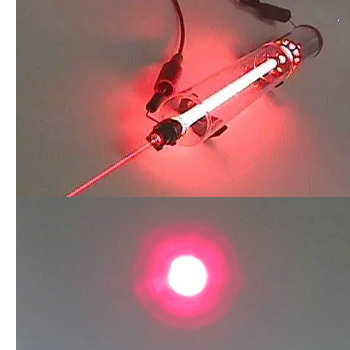
The helium-neon laser boasts slightly better output power and laser frequency stability, as well as superior monochromaticity, coherence, and directionality of its beam. It also features a long device lifespan, a simple structure, and a relatively low price. The semiconductor laser, also known as the laser diode, is one of the most recent breakthroughs in semiconductor physics developed in the 1980s. Semiconductor lasers have several advantages: small size, light weight, high reliability, long service life, low power consumption, and operation on low-voltage DC power supplies. Of course, nothing in the world is absolutely perfect—both helium-neon lasers and semiconductor lasers have their own drawbacks. To put it simply, the helium-neon laser does indeed offer excellent beam quality; however, its beam diameter is too narrow, typically no more than 0.9 mm.
 Analysis of Helium-Neon Lasers and Semiconductor Lasers
It’s inaccurate to simply say whether a helium-neon laser or a semiconductor laser is better. Objectively speaking, each has its own strengths and weaknesses. Let’s first analyze the advantages of each. The helium-neon laser boasts slightly better output power and laser frequency stability; its beam exhibits excellent monochromaticity, coherence, and directionality. It also features a long device lifespan, a simple structure, and a relatively low price. On the other hand, the semiconductor laser—also known as a laser diode—is one of the most recent breakthroughs in semiconductor physics, achieved in the 1980s. The semiconductor laser excels in its small size, light weight, high reliability, long service life, low power consumption, and compatibility with low-voltage DC power supplies. Of course, nothing in this world is absolutely perfect, and both helium-neon lasers and semiconductor lasers have their own drawbacks. To put it simply, the helium-neon laser does indeed offer superior laser beam quality. However, the beam diameter of a helium-neon laser is too narrow—typically no more than 0.9 mm. If a helium-neon laser is used in a particle-size analyzer, it must be paired with an expanding lens (a microscope objective) to increase the beam diameter to between 15 mm and 25 mm. After passing through the expanding lens, the laser beam generates a significant amount of stray light, which needs to be filtered out using a pinhole aperture. During operation, the laser, the expanding lens, the pinhole aperture, and the Fourier lens must all be securely fixed within the optical path. Moreover, the helium-neon laser generates substantial heat; the temperature near the laser assembly can rise as high as 60°C. Such large temperature fluctuations can cause thermal deformation of the optical rails, leading to relative displacement among the laser, the expanding lens, the pinhole aperture, and the Fourier lens. This, in turn, severely compromises the accuracy and stability of the particle-size analyzer’s measurements.

The helium-neon laser requires approximately 10,000 V DC (the breakdown voltage) to initiate the excitation process, and to maintain stable operation under normal conditions, it needs a steady-state operating voltage ranging from 2,000 V DC to 3,000 V DC. The high excitation voltage of tens of thousands of volts can sometimes cause high-voltage discharge, leading to insufficient excitation voltage and resulting in sparking—preventing the helium-neon laser from functioning properly. The high-voltage discharge generated internally by the instrument at extremely high voltages may pose certain risks to personnel using the equipment. To achieve stable operation, the helium-neon laser must be preheated for 20 to 30 minutes in advance; in contrast, semiconductor lasers can stabilize their operation in as little as 3 to 5 seconds. Most semiconductor lasers are powered by direct current voltages of either 5 V or 12 V, eliminating the risk of discharge and posing no potential harm to operators. Although semiconductor lasers do not produce the same quality Gaussian beam as helium-neon lasers, after coupling through optical fibers, they can deliver a pure, expanded Gaussian beam with a well-defined spot pattern. Fiber-coupled semiconductor lasers feature standardized national interfaces that make assembly and disassembly much more convenient. Moreover, fiber output avoids thermal deformation, ensuring greater stability of the instrument's performance. From its inception, Shandong NKT had been using helium-neon lasers. However, after comparing performance across various aspects, NKT found that semiconductor lasers coupled via optical fibers significantly outperformed helium-neon lasers. Consequently, in 2017, NKT switched all its product lines to imported fiber-coupled semiconductor lasers. In 2018, NKT’s technical staff developed the LIMS laser intelligent management system, which has extended the lifespan of semiconductor lasers several times over—potentially reaching several decades under ideal conditions.
Unique technology
Shandong NKT
Service Hotline:
Address:
No. 299 Zidong Avenue, Tianqiao District, Jinan City, Xinmao Qilu Science and Technology City

WeChat.