Home
Products
Wet laser particle size analyzer
Dry laser particle size analyzer
Wet and dry integrated laser particle size analyzer
Nanoparticle Size and Zeta Potential Analyzer
Spray Laser Particle Size Analyzer
Online laser particle size analyzer
Image Granularity Analyzer
Zeta Potential Analyzer
Technology
Laser Particle Size Analyzer Related
Knowledge popularization related
Online Testing Research
Nano-testing related
Image Analysis Test Study
Service
Applied Research
Technical support
After-sales service
Video
Technical Explanation
Instrument Usage
Instrument Maintenance
About Us
Company Introduction
Honorary Qualifications
Corporate culture
Development History
Employee Highlights
Blog
Company News
Product Updates
Application Industry
Contact Us
Headquarters
Domestic Office
Foreign office
Professional manufacturer of intelligent analytical instruments
Light Source Selection
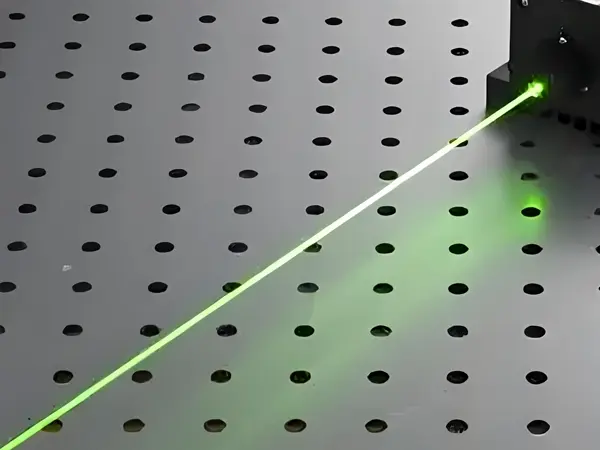
Currently, there are two main types of laser light sources used in laser particle size analyzers on the market: helium-neon gas lasers and semiconductor solid-state lasers. After several years of development, semiconductor lasers have outperformed helium-neon lasers in all aspects when used in particle size analyzers. In the past, some particle size analyzer manufacturers blindly downgraded their products by using low-quality semiconductor lasers and directly compared semiconductor lasers with helium-neon lasers. Did you know that semiconductor lasers come with fiber-optic coupling technology? The beam quality of helium-neon lasers is significantly superior to that of helium-neon lasers equipped with beam expanders. Another interesting comparison is that helium-neon lasers only become stable once they reach a certain temperature—this is precisely why helium-neon lasers require a warm-up period. As long as the temperature remains constant and the power stays stable, the laser needs to maintain a constant temperature. The semiconductor lasers used by Shandong NKT are both temperature-stabilized and power-stabilized. During continuous operation lasting more than 72 hours, the fluctuations in laser quality inspection departments have been consistently within a range of no more than ±1%. In summary, semiconductor lasers exhibit excellent performance in every aspect and can meet the future demands of semiconductor light sources.
Optical path stability
Considering whether there is a stable platform, whether there is an automatic light function, whether it’s possible to measure a wide range of particle sizes without replacing the lens, and whether the measurement standards can be met—worth noting is that the helium-neon gas laser’s inherent instability in maintaining a stable optical path, coupled with the internal heating of the helium-neon laser, can affect the environment surrounding the optical path and cause thermal deformation of the metal components.
Probe
The detector is one of the key components of a laser particle size analyzer. The cost of a high-quality detector can sometimes account for more than one-quarter of the total cost of the entire particle size analyzer. In Chapter 6.7 of ISO 13320, the "International Standard for Laser Diffraction," the impact of detectors on the sensitivity and resolution of laser particle size analyzers is specifically highlighted. Therefore, detector selection should be carefully considered from the very beginning. The number of detection units in a detector depends on its geometric structure, arrangement, effective area, and actual physical detection angle. Most importantly, the photoelectric conversion efficiency of the detector is crucial. The raw materials for the detectors used by Shandong NKT Analytical Instrument Co.,Ltd. come from Germany, ensuring high conversion efficiency and long service life. It is precisely because of this that we dare to extend the quality assurance period for our core components to five years.
The sample dispersion and sampling system is an essential accessory for ensuring proper dispersion and sampling of the sample.
The wet-dispersion sampler for particle size analyzers requires a circulating pump with built-in ultrasonic and stirring functions, as well as sufficient pumping capacity—ideally, a centrifugal pump. The dry-dispersion sampler should feature stable injection capability, adjustable air pressure, and the option to select sample plates of different capacities. Moreover, during sample measurement, it is sometimes unavoidable for particles to adhere to the window of the sample cell; therefore, the instrument’s automatic cleaning function is also extremely important.
This software is used for the control and data analysis of laser particle size analyzers.
The faster the data acquisition speed, the better. In the ISO 13320 international standard, it is specifically emphasized that when particle sizes are less than tens of micrometers, the correct refractive index and absorption coefficient of the sample should be input using the Mie theory to obtain more accurate results. Therefore, the software needs to include a database of optical parameters—namely, refractive index and absorption coefficient—for common materials, which can be supplemented by user input. Additionally, data output functionality, user report format design capabilities, and scalability features are also essential factors. If the software and accompanying documentation are available in Chinese, this would be an even better choice for most Chinese users.