





Product Center
Professional manufacturer of intelligent analytical instruments

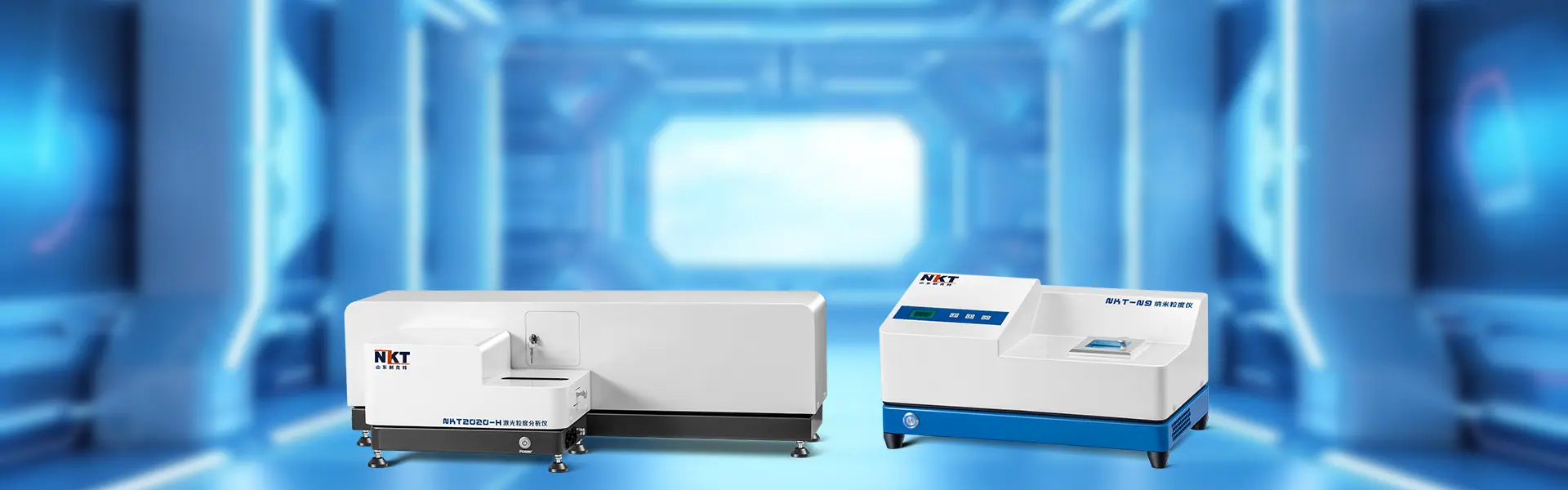
NKT-N9
Keywords:
NKT-N9
- Description
- Parameter
- Technology
- Applicable scope
-
- Commodity name: NKT-N9
Measurement range: 0.5 nm – 10,000 nm (sample-dependent) External dimensions: 440 mm × 245 mm × 228 mm Product features: Particle and molecular weight measurement; Fiber-coupled semiconductor laser; High-speed digital correlator; One-button switching between dual-wavelength lasers; ±0.1% high-precision constant temperature control; Hamamatsu photomultiplier tube.
Product Overview

The NKT-N9 series nanoparticle size analyzer is an analytical instrument specifically designed to characterize the size and distribution of nanoparticles. Based on the principle of dynamic light scattering (DLS) and photon correlation spectroscopy (PCS), it uses a laser beam to illuminate nanoparticles uniformly dispersed in a sample cell. The optical fiber at a 90° angle detects the dynamic scattered light, whose intensity fluctuates over time due to the Brownian motion of the nanoparticles. This scattered light is then transmitted to a photomultiplier tube (PMT), which converts the light signal into discrete electrical pulses. These pulses are subsequently processed by a digital correlator to generate an autocorrelation curve for the sample. By applying mathematical methods to this autocorrelation curve, the instrument determines the diffusion coefficient of the particles. Finally, using the Stokes-Einstein equation, the instrument calculates the particle size and distribution of the sample under test.
-
Product Parameters
Measurement principle
Dynamic Light Scattering (DLS), Photon Correlation Spectroscopy (PCS), Static Light Scattering (SLS) Particle size range
0.5 nm – 10,000 nm (depending on sample options) Detection angle
90º Test parameters
Particle size, molecular weight, second virial coefficient Laser device
The integrated constant-temperature system has a maximum power of 50 mW and is equipped with a solid-state laser at either 532 nm or 405 nm (optional).
Relevant device
512 physical channels, sampling time from 0.1 µs to 1 ms Dynamically adjustable Detector
Photomultiplier Tube (PMT)
Filtering method
Light trap filtering
Accuracy error
Better than ±1% (average particle size, NIS-traceable standard sample)
Repetitive error
Better than ±1% (average particle size, NIS-traceable standard sample)
Sample pool
12mm quartz cuvette, 1 ml–4 ml
Test concentration within a small range
0.1 mg/mL – 40% w/v (depending on sample option)
Molecular weight testing range
340 Da-2×10 7 Yes (Regarding sample options) Measure speed
Less than 5 minutes per session
Temperature control range
5℃-90℃
Temperature control accuracy
±0.1℃
Light intensity adjustment range
0 - 100%, automatically adjustable Environmental requirements
5°C–45°C, 10%–85% relative humidity (no condensation)
Working power
AC 100V-240V @ 50Hz-60Hz, DC 12V/10A External dimensions
440mm × 245mm × 228mm
Instrument weight
9.5 kg
Scope of implementation
GB/T29022-2021/ISO22412-2017 GB/T19627-2005/ISO13320-1996 -
Technical Explanation
All-fiber test optical path, enabling high sensitivity.
The test optical path, constructed using a high-performance, low-noise fiber-coupled semiconductor laser and an all-fiber dynamic scattered-light detection system, employs a HAMAMATSU photomultiplier tube (PMT) with low dark count and high sensitivity as the photoelectric detector. This configuration endows the entire testing system with exceptionally high sensitivity and a remarkably high signal-to-noise ratio, laying a solid foundation for enhanced measurement accuracy and high resolution.
The self-developed high-speed digital correlator, serving as a core component for signal processing, acquires dynamic scattered light intensity at high speed and in real time, performing autocorrelation computations. It boasts a 6 ns signal resolution capability, data processing speeds in the hundreds of megabits per second, and a performance exceeding 10. 11 Linear dynamic range, ensuring the completeness of autocorrelation curves for particles of different sizes across the entire measurement range.

 Full-range calibration verification to ensure test accuracy.
Calibration and verification were performed using a variety of national particle size reference materials across the entire measurement range, and the resulting measurement accuracy errors were all less than 1% (exceeding the requirements of the national standard GB/T29022-2021/ISO22412:2017).
The semiconductor laser equipped with advanced automatic temperature-control technology ensures stable and reliable laser output. The high-precision temperature-control system maintains the sample in the sample cell at a constant temperature throughout the entire testing process, thereby preventing test deviations caused by changes in medium viscosity and particle Brownian motion speed due to temperature fluctuations, and thus guaranteeing the reliability and stability of the test results.

The same sample from the customer was prepared into six test samples for analysis, and the repeatability error was less than 1% (exceeding the requirements of the national standard GB/T29022-2021/ISO22412:2017).
-
Scope of Application
The NKT-N9 laser particle size analyzer is widely used in various fields—including new materials, pharmaceuticals, bioengineering, life sciences, chemical industry, coatings, and food safety—to characterize the particle size of organic or inorganic nanoemulsions, powders, polymeric polymers, micelles, viral antibodies, proteins, and other samples, as well as to analyze the dispersibility and stability of sample systems.
Certification

High-tech Enterprise Certificate
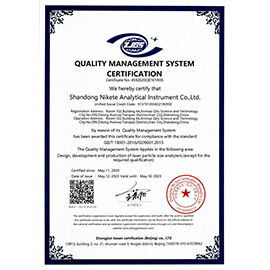
Quality Management System Certification Certificate
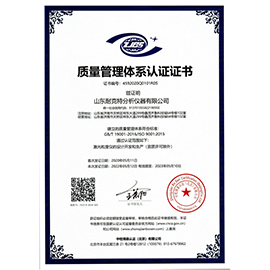
Quality Management System Certification Certificate
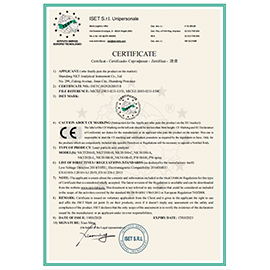
CE certification
Factory

4

3

2

1
Exhibition event

4

3

2

1
FAQ
If you’re interested in this product, please fill out the following information and submit it to us. We’ll arrange for an expert to contact you as soon as possible!
Related products
Related products
Shandong NKT
Service Hotline:
WhatsApp:
Address:
No. 299 Zidong Avenue, Tianqiao District, Jinan City, Xinmao Qilu Science and Technology City
WeChat.