





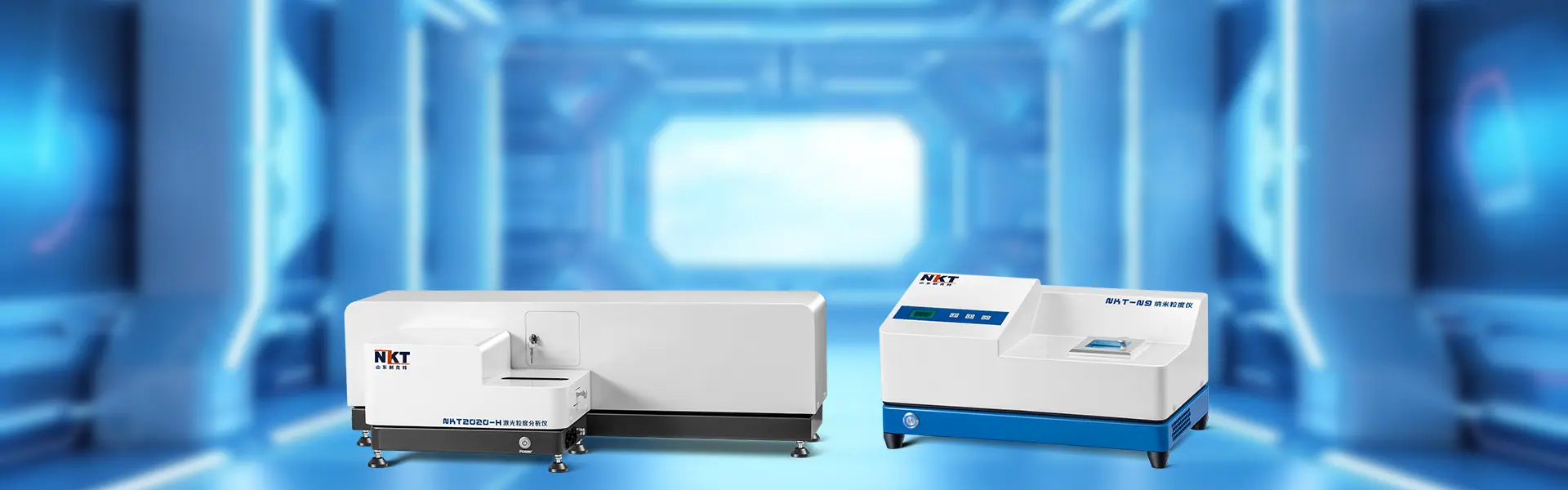
Product Center
Professional manufacturer of intelligent analytical instruments

NKT5200-H
Keywords:
NKT5200-H
Category:
- Description
- Parameter
- Technology
- Applicable scope
-
- Commodity name: NKT5200-H
Implementation Standards: ISO 13320-2020, GB/T 19077-2024, GB/T 41949-2022 External Dimensions: 800mm × 280mm × 335mm Product Features: Automatic Dispersion Agent Filling System; Intelligent Optical Path Alignment System; Professional-Grade Dust- and Vibration-Proof Design; Intelligent Ultrasonic Dry-Run Protection System; Single-Beam Dual-Lens Optical System; LIMS Laser Intelligent Management System.
Product Overview
The NKT5200-H wet-method fully automatic laser particle size analyzer is an upgraded and expanded version of the highly acclaimed NKT5100 series, and since its launch, it has earned widespread recognition from numerous customers. This instrument is equipped with NKT’s independently developed Laser Intelligent Management System (LIMS), which enables a groundbreaking extension of the laser’s lifespan—approaching theoretically infinite lifetime—and significantly reduces users’ long-term operating costs. The instrument employs the internationally advanced Mie scattering principle and a convergent light Fourier transform optical path, combined with a dual-lens technology that integrates a Fourier transform lens and a filtering lens, ensuring measurement accuracy meets even higher standards. By combining a high-density array detector with a seamless full-range testing method, the instrument guarantees accurate and reliable test data with outstanding repeatability. Its unique wet-method circulation dispersion system features a pipeline design with zero residue, effectively preventing large particle deposition during testing and eliminating residual waste liquid after the test is completed. This design not only enhances the accuracy of measurements for different types of samples but also greatly improves the reproducibility between consecutive multiple tests, ensuring that every measurement yields true and stable particle size results.
-
Product Parameters
Measurement principle
Mie Scattering Principle for the Full Measurement Range
Particle size range
0.1 μm – 1000 μm (full-range testing)
Detection system
86-channel uniform cross-over and area-compensated multi-orientation laser array
Laser
High-power fiber-coupled semiconductor laser with a wavelength of 635 nm and a maximum output power of 20 milliwatts.
Laser Management
LIMS Laser Intelligent Management System
Optical model
Mie scattering theory over the entire measurement range, including a high-concentration multiple-scattering dynamic compensation technique.
Filtering method
Dual-lens filtering technology: Fourier transform lens + filtering lens
Collect the motherboard
High-speed acquisition motherboard (10,000 times/second)
Concentration range
Minimum shading rate: 3%; maximum shading rate: 90% (optical density)
Sample cell
Processed with a special coating technology, the optical signal transmittance exceeds 99.7%.
Protection function
Ultrasound dry-run protection, liquid-level sensor, overflow pipe, and no response to misoperations.
Ultrasound power
50W, optional adjustable power, ultrasonic dry-run protection
Optical centering
Mechanical Center + Optical Center Dual-Positioning Fully Automatic Centering System
Measure time
Typical value < 10 seconds
Measurement accuracy
Accuracy and repeatability Dv50 are both better than ±0.5% (NIST-traceable standard sample).
Measurement method
SOP editable fully automatic measurement
Ambient temperature
0°C–45°C
Environmental humidity
10%-85% relative humidity (no condensation)
Power requirements
220V (±20V), 50Hz–60Hz
Implementation standard
ISO 13320-2020, GB/T 19077-2024, GB/T 41949-2022
External dimensions
800mm × 280mm × 335mm
Instrument weight
38kg
-
Technical Explanation
 One-click intelligent testing for the entire process—extremely simplified operation, consistent results.
The instrument features a built-in, editable Standard Operating Procedure (SOP) that, with just one click, automatically executes the entire testing process—from water intake and bubble removal to background measurement, sample dispersion, data acquisition, storage, and cleaning. By delegating complex operations to the instrument itself, operators need only place the sample into the device, significantly reducing reliance on operator experience. This mode completely eliminates the inevitable variations and subjective errors inherent in manual operations, ensuring high consistency and reliability of test data across different operators and at different time points—perfectly aligning with GLP laboratory standards and quality traceability system requirements.
LIMS Laser Intelligent Management System—Smart Optical Paths, Forever StableThe system integrates an advanced LIMS laser intelligent management system, enabling precise and intelligent control of laser sources. It can monitor the optical path status in real time, instantly activate the laser upon receiving a test command, and quickly reach a stable operating state within 3 seconds—greatly reducing wait times and boosting detection efficiency. After measurement is complete, the system automatically shuts down the laser, fundamentally eliminating unnecessary standby power consumption. This intelligent management technology effectively prevents light degradation caused by prolonged laser operation, significantly extending the service life of core components. In theory, the design allows the laser to operate without replacement for its entire lifespan, delivering customers unparalleled reliability and ultra-low maintenance costs.
Single-optical-path dual-lens optical system—pure, pristine light signals with ultimate sensitivity.This design employs an innovative dual-lens system that combines a Fourier-transform lens with a filtering lens. The technology establishes a pristine, single-optical-path detection environment, efficiently eliminating unnecessary stray light interference from the incident optical signal and significantly enhancing the purity of the optical background. As a direct result, the signal-to-noise ratio is dramatically improved, enabling the instrument to achieve exceptional sensitivity and resolution in detecting scattered light signals from minute particles in samples. This greatly enhances the measurement’s sensitivity and accuracy, making it particularly well-suited for high-precision analysis of nanomaterials and low-concentration samples.
Ultra-high-speed signal acquisition system—capturing transients, revealing insights at the nanoscaleEquipped with a fifth-generation ultra-high-speed signal acquisition motherboard, the system achieves an ultra-high sampling rate of 10,000 times per second. Thanks to this hardware-level breakthrough, the system can complete comprehensive, lossless, and synchronous capture of all particle-scattered light signals within the fleeting 0.1-second interval when samples pass through the measurement zone. This completely resolves the issue of signal omission caused by the random orientation of particles, thereby ensuring unparalleled accuracy and high repeatability in particle size distribution results.
Sample design with zero residue—zero residual, real data.An innovative flow-path system design has been adopted, enabling a comprehensive optimization of pipeline layout and drainage structure. At the heart of this system is a self-cleaning circulation pump featuring patented technology. Its unique structural design and hydrodynamic optimization ensure that, upon completion of testing, no residual liquid remains in either the pipelines or the pump body. This breakthrough completely resolves the longstanding challenge of cross-contamination caused by sample residues in conventional instruments, thereby guaranteeing the independence and absolute accuracy of each test result from the very outset of the hardware design. As a result, the instrument’s test reproducibility and reliability have been significantly enhanced.
Professional-grade dustproof and shockproof design—unafraid of environmental fluctuations, ensuring data remains consistently reliable.Featuring a professional, integrated, sealed dust-proof system and an anti-vibration design, this solution effectively prevents external dust from entering and minimizes the transmission of vibrations. This design ensures long-term stability and precise focusing of the core optical path system, eliminating the need for manual adjustment of the detector position. As a result, maintenance frequency is significantly reduced, guaranteeing ultra-high repeatability and reliability of measurement results—even under challenging industrial conditions.
Dispersion Agent Automatic Dosing System—Precision Intelligent Control, Simplifying the ComplexAn optional high-precision dispersant automatic addition system is available. This system integrates seamlessly with the instrument’s intelligent SOP (Standard Operating Procedure), enabling it to automatically and quantitatively add dispersants during the testing process according to pre-set methods. This completely eliminates random errors caused by manual addition, ensuring highly consistent sample pretreatment and significantly enhancing the reliability, reproducibility of test results, and the level of operational automation.
Sample Window Quick-Change System—Revolutionary Design, Operation in SecondsEquipped with a revolutionary sample window quick-change mechanism, this device features a user-friendly snap-lock and guiding structure design. Without the need for any tools, users can independently complete the entire process of removing and installing the sample window in just 10 seconds, greatly simplifying the maintenance procedure, significantly reducing instrument maintenance time, and ensuring continuous operational efficiency in high-throughput testing environments.
Intelligent Ultrasonic Dry-Run Protection System—Smart Sensing, Proactive ProtectionEquipped with an intelligent ultrasonic dry-run protection system, this device can monitor the status of the dispersion medium in real time. When the system detects that there is no liquid in the sample cell, it will automatically prevent the ultrasonic unit from starting up or immediately halt operation. This fundamentally prevents damage to the ultrasonic system caused by operation under no-load conditions, significantly enhancing the equipment’s reliability and service life.
Fully automatic bubble-free system—innovative flow path design enhances operational efficiency.Employing fully automatic bubble-free flow path technology, and through integrated optimization of the water inlet, drainage, and circulation systems, this approach fundamentally eliminates the issue of air trapped in pipelines. Throughout the entire testing process, no air-venting operations are required, effectively preventing bubble interference and significantly enhancing detection efficiency and data accuracy.
Intelligent Multi-dimensional Reporting and Analytics System—Flexible, Efficient, Intelligent, and IntuitiveEquipped with professional-grade particle size analysis software, this system integrates a robust database and a multi-dimensional reporting system. It supports exporting reports in multiple formats and allows for customized editing. Additionally, it features simultaneous comparison of multiple datasets on a single screen, significantly enhancing data interpretation efficiency and report-generation flexibility, thereby fully meeting the requirements of scientific research, quality control, and compliance.
Intelligent Optical Path Dual-Alignment System—One-Click Calibration, Dynamic StabilityPioneering a dual-centering optical path system that integrates both mechanical and optical centering technologies. This system enables one-click startup and instantaneous, precise centering, completely eliminating the need for tedious manual adjustments. Moreover, the system continuously monitors and automatically maintains the optimal state of the optical path throughout the entire operation, ensuring long-term stability of measurement results and high instrument reliability—truly making it effortless and worry-free.
High repeatabilityThe NKT5200-H boasts excellent repeatability; its measurement results remain highly consistent across multiple experiments, with error margins typically kept within extremely narrow limits. This outstanding repeatability stems from the instrument’s meticulously designed optical system and stable laser source, which ensure that the conditions for collecting particle-scattered light signals are identical every time a test is performed. Whether analyzing consecutive batches of samples or measuring the same sample at different time points, the laser particle size analyzer consistently delivers stable and reliable particle size distribution data. It effectively eliminates the impact of human operational variability and environmental fluctuations on the results, providing robust data support for quality control in both scientific research and industrial production.
 High accuracy and resolution
The NKT5200-H boasts excellent accuracy and resolution. Thanks to its precise optical system and advanced data-processing algorithms, it can perform highly accurate particle-size distribution measurements on particulate samples. In terms of accuracy, this instrument employs a stable laser source that ensures uniform and consistent beam intensity. Coupled with a sophisticated detector array, it can keep measurement errors within an extremely narrow range—typically within ±0.5%—thus accurately reflecting the true particle-size characteristics of the sample. As for resolution, the laser particle-size analyzer can clearly distinguish between particle populations of different sizes, even detecting subtle differences in particle diameter with remarkable effectiveness.

-
Scope of Application
- Industrial Minerals and Powders: Non-metallic powders such as heavy calcium carbonate, talc, and kaolin; metallic powders including aluminum, copper, and rare earth metals; building material raw materials such as cement, ceramics, and graphite.
- Energy and Chemical Materials: Cathode and anode materials for lithium batteries, catalysts, phosphors, rubber and plastic additives, drilling fluids, and more;
- Pharmaceuticals and Biologics: Active Pharmaceutical Ingredients, Microgranules, Ultrafine Powders of Traditional Chinese Medicine, Suspension Concentrates for Pesticides, Spray Formulations, etc.;
- Food and Daily Chemicals: Dairy products, starch, protein particles, pigments, dyes, coatings, inks, etc.;
- Environment and Geology: Particle monitoring of sediment, deposits, dust, aerosols, water treatment flocculants, and other particulates.
Certification

High-tech Enterprise Certificate

Quality Management System Certification Certificate
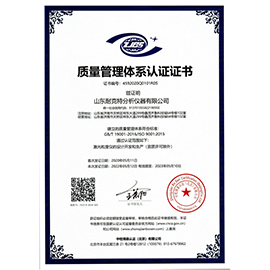
Quality Management System Certification Certificate
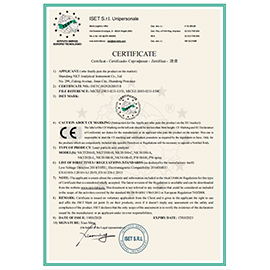
CE certification
Factory

4

3

2

1
Exhibition event

4

3

2

1
FAQ
If you’re interested in this product, please fill out the following information and submit it to us. We’ll arrange for an expert to contact you as soon as possible!
Related products
Related products
Shandong NKT
Service Hotline:
WhatsApp:
Address:
No. 299 Zidong Avenue, Tianqiao District, Jinan City, Xinmao Qilu Science and Technology City
WeChat.