






News Center
Professional manufacturer of intelligent analytical instruments
Exploring the Function and Principle of Laser Particle Size Analyzers
Release time:
2023-04-19
Author:
Source:
A laser particle size analyzer is a new type of particle size measurement instrument that uses the properties of lasers to perform particle size analysis. Compared with traditional measurement methods, it offers higher precision and better reproducibility. During experiments, real-time monitoring of particle size changes allows for the acquisition of more accurate experimental data. Additionally, by employing a high-speed scanning camera, a large volume of image data can be captured in a short period, eliminating the difficulties associated with sample handling in conventional methods and making the measurement process much more efficient.
A laser particle size analyzer is a new type of particle size measurement instrument that uses the properties of lasers to perform particle size analysis. Compared with traditional measurement methods, it offers higher precision and better reproducibility. During experiments, real-time monitoring of particle size changes allows for the acquisition of more accurate experimental data. Meanwhile, by employing a high-speed scanning camera, a large volume of image data can be captured in a short period, eliminating the difficulties associated with sample handling in conventional methods and making the measurement process much more efficient.
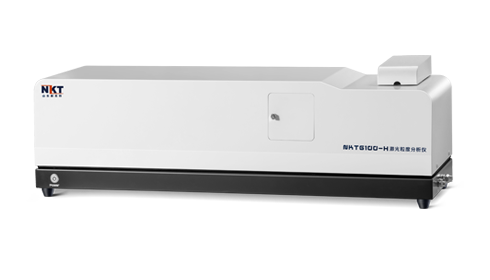
The high precision and high efficiency of laser particle size analyzers stem from their unique operating principle. During measurement, a laser beam is directed onto the sample; the laser light that is scattered back passes through a lens and an optical detector, generating a scatter plot. By processing this image with specialized analysis software, one can obtain an accurate particle size distribution curve along with relevant physical parameters. These analyzers offer greater accuracy, superior precision, and faster measurement speeds. Whether in academic research or industrial production, they play a crucial role and have become a key technology in the field of particle size analysis.
A laser particle size analyzer is an optical instrument primarily used to measure the size distribution of particles in a material. Its basic principle is based on optical scattering: it measures the intensities of reflected, scattered, and transmitted light from particles as they pass through a light beam, and then uses particle imaging and computer processing to determine the particle size distribution. This instrument has a wide range of applications across various fields, including mining, chemical engineering, environmental protection, food processing, and pharmaceuticals. Taking mining as an example, a laser particle size analyzer can be used to analyze the particle size distribution in granular materials such as ores, coal, metallic minerals, construction and pavement materials, cement, sand, and concrete. By measuring the particle size distribution, one can gain insights into the quality and performance of raw materials as well as changes occurring during the processing stages.
The measurement accuracy of a laser particle size analyzer is closely related to its measurement range. Generally speaking, laser particle size analyzers can measure particles ranging in size from just a few nanometers up to several millimeters. The measurement range and accuracy may vary depending on the specific model of the laser particle size analyzer; however, in general, their measurement accuracy can reach 0.1 μm or even higher. In addition to measuring particle size distribution, these instruments can also provide important parameters such as particle shape, volume, surface area, and polydispersity. Measurement can be performed either offline or online. Offline measurement requires sample preparation prior to analysis, whereas online measurement involves directly feeding the sample into the laser particle size analyzer for real-time measurement and analysis.
Laser particle size analyzers play an important role in the measurement, manufacturing, and quality control of particulate materials. However, during use, it’s important to note that particles from different materials have varying characteristics; therefore, suitable measurement parameters should be selected based on the specific circumstances.
In summary, as a precision instrument, the laser particle size analyzer boasts advantages such as high accuracy, rapid measurement, and automation. However, it also has certain drawbacks, including a high price, challenging maintenance requirements, and the need for operators to possess specialized knowledge and experience. In the future, with further technological advancements, laser particle size analyzers will become increasingly intelligent, miniaturized, and feature-rich.
Latest News
Shandong NKT
Service Hotline:
WhatsApp:
Address:
No. 299 Zidong Avenue, Tianqiao District, Jinan City, Xinmao Qilu Science and Technology City

WeChat.