






News Center
Professional manufacturer of intelligent analytical instruments
Applications of the Fully Automatic Laser Particle Size Analyzer
Release time:
2023-01-03
Author:
Source:
With the continuous advancement of science and technology, various industries have also experienced significant growth. As for the fully automatic laser particle size analyzer, its development prospects are quite promising, leading to a steadily increasing demand. Consequently, the number of manufacturers in the market has also risen considerably. As a manufacturer ourselves, we feel it’s essential to share with you some information about the applications of fully automatic laser particle size analyzers. If you’re interested, let’s take a closer look together!
With the continuous advancement of science and technology, various industries have also experienced significant growth. As for the fully automatic laser particle size analyzer, its development prospects are quite promising, leading to a steadily increasing demand. Consequently, the number of manufacturers in the market has also risen considerably. As a manufacturer ourselves, it’s essential for us to take this opportunity to share with you the applications of fully automatic laser particle size analyzers. If you’re interested, let’s dive in together!
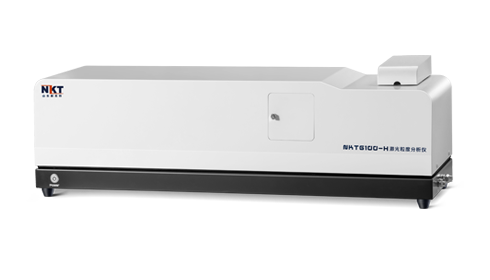
Before using this fully automatic laser particle size analyzer, many of you have likely encountered various challenges. Therefore, to make the most of it, it’s essential to familiarize yourself with some key concepts about its operation. First and foremost, you should understand that the fully automatic laser particle size analyzer—a new type of particle-size measurement instrument—has found widespread application in numerous other fields related to powder processing. It boasts advantages such as fast testing speed, excellent repeatability, superior performance, and ease of operation. As a result, this instrument is extensively used in industries including powder metallurgy, thin films, membrane materials, catalysts, insulating materials, lubricating oils, superconductors, and radio engineering—as well as in sectors like chemicals, pharmaceuticals, food, and building materials, where it plays an increasingly important role and exerts ever-greater influence. The underlying principle is that when light propagates, its wavefront is constrained by pores or particles whose dimensions are comparable to the wavelength of the light. In such circumstances, each fundamental wave emitted from the source, confined within a finite wavefront, can interfere with itself in space, giving rise to diffraction and scattering phenomena. The spatial (angular) distribution of the energy carried by the diffracted and scattered light is closely related to both the wavelength of the light wave and the size of the pores or particles.
The fully automatic laser particle size analyzer uses laser light as its light source. After the light is monochromatic with a specific wavelength, the spatial distribution (angle) of scattered and diffracted light energy depends solely on the particle size. The diffraction pattern produced by the particle population reveals that the number of particles at each size level determines the amount of light energy captured at a given angle, as well as the proportion of total energy accounted for by light energy at that particular angle. The intensity of the light thus reflects the size distribution and abundance of particles at each level. Therefore, if we proceed based on this principle, we can establish a mathematical and physical model to characterize both the particle sizes and the abundance of light energy obtained at each specific angle, and subsequently develop an instrument capable of measuring light energy. By comparing the light energy detected by the fully automatic laser particle size analyzer, we can infer the relative abundance ratios of different particle size levels within the particle population. Moreover, generally speaking, as particle size decreases, the particles become smoother and more uniform, leading to an increase in specific surface area, porosity, adsorption capacity, solubility, affinity, and dissolution rate. Under these conditions, the drug's dissolution rate naturally improves. Consequently, the active ingredients in the fully automatic laser particle size analyzer can disperse and dissolve more effectively in gastric fluids, increasing their contact area with the gastric mucosa and facilitating absorption from the gastrointestinal tract, thereby enhancing therapeutic efficacy.
Having introduced the above-mentioned content, we’ve now gained a good understanding of the applications of fully automatic laser particle size analyzers. We’ll continue updating you with more information on other relevant topics in the next installment—so if you have the time, be sure to tune in. Our customer service team is available 24 hours a day to assist you. Over the years, our company has been committed to expanding and developing both domestic and international markets, adopting a dual approach that combines online e-commerce platforms with offline physical sales channels.
Latest News
Shandong NKT
Service Hotline:
WhatsApp:
Address:
No. 299 Zidong Avenue, Tianqiao District, Jinan City, Xinmao Qilu Science and Technology City

WeChat.