






News Center
Professional manufacturer of intelligent analytical instruments
What should you pay attention to when using a particle size analyzer? Here’s an introduction from a wholesale manufacturer of particle size analyzers!
Release time:
2022-12-14
Author:
Source:
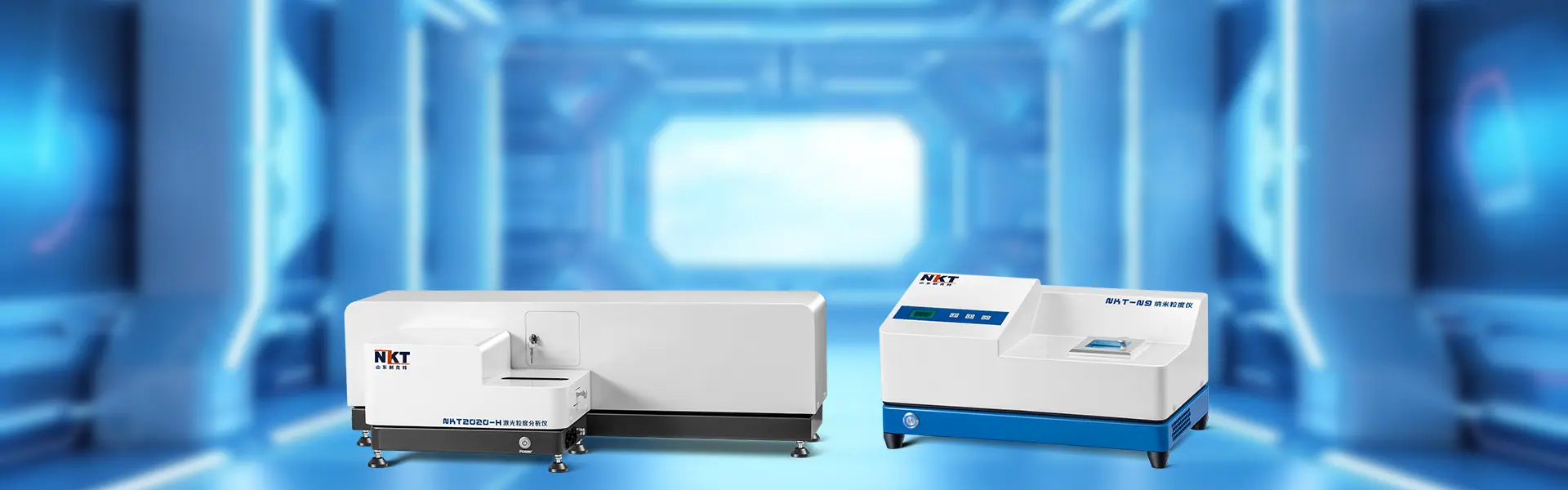
The wholesale manufacturer of particle size analyzers introduces that particle size analyzers, as crucial tools for characterizing the particle size of powdered materials, have become a popular choice and are widely used across various fields.
The wholesale manufacturer of particle size analyzers introduces that particle size analyzers, as crucial tools for characterizing the particle size of powdered materials, have become a popular choice and are widely used across various fields.

Wholesale manufacturer of particle size analyzers
A laser particle size analyzer is an instrument that analyzes particle size by examining the diffraction or spatial distribution (scattering spectrum) of scattered light. It employs Fraunhofer diffraction and Mie scattering theories. The testing process is unaffected by numerous factors, such as temperature fluctuations, medium viscosity, sample density, and surface conditions. As long as the sample to be tested is uniformly illuminated by the laser beam, accurate test results can be obtained.
What should you pay attention to when using a particle size analyzer? Here’s an introduction from a wholesale manufacturer of particle size analyzers!
1: Preheat the measurement unit. Since the particle size analyzer is made of precision electronic components, the electronic components in its circuit have a critical technical parameter. When the components are powered on, their temperature changes over time. The smaller the error caused by these temperature-induced changes in the technical parameters, the better. Therefore, the particle size analyzer needs to be powered on and preheated. According to technicians, generally speaking, if a user turns off the particle size analyzer for more than half an hour before turning it back on, it will need to be preheated.
2. System calibration. System alignment involves adjusting the center of the laser beam of the particle size analyzer to the center of the annular photodetector.
3. System Parameter Settings. On the main menu interface of the laser particle size analyzer, the operator clicks “Settings” with the left mouse button, and a “Settings” submenu pops up on the screen. In this menu, enter items such as the sample name and the tester’s name to ensure proper operation of the equipment and accountability of the responsible personnel.
4. Sample Preparation. Sample preparation refers to the process of selectively obtaining an appropriate amount of representative data from the powder material to be tested as the measurement sample. This involves choosing a suitable suspension medium and dispersant, mixing the sample with the suspension medium, and ensuring that the sample particles are thoroughly dispersed within the suspension medium without undergoing any chemical reactions with either the suspension medium or the dispersant.
What are the daily maintenance procedures for a laser particle size analyzer? Here’s an introduction from a wholesale manufacturer of particle size analyzers!
1. Cleaning and maintenance: After each experiment, be sure to clean the equipment promptly to prevent contamination of the internal experimental system and avoid affecting the test results. After using the equipment for a period of time, the sample window should also be cleaned regularly.
2. Is the instrument’s hardware functioning properly? Can it connect to the computer normally? Can it perform baseline measurements without issue? Is the ultrasonic stirring and circulation system operating correctly? The circulation is primarily driven by a pump within the instrument. Water flows out through the round orifice on the sample cell; it’s normal if there are no obvious air bubbles.
3. Is the optical path functioning properly? Is the laser tube working normally and emitting light? Second, is there any polarization phenomenon in the optical path? You can block the light beam in front of the sample window; an approximately circular shape is normal.
4. Reference Calibration. Most issues regarding whether the instrument is functioning normally can be determined through reference calibration. It’s particularly important to establish the reference properly. Add water (e.g., distilled water) into the sample cell, click the drain button, close the drain valve, and then turn on the circulation button until water starts flowing out from the upper port of the sample cell. Next, use the software to perform a reference calibration—once a series of small blue columns appear, you’ll have obtained the reference graph.
Latest News
Shandong NKT
Service Hotline:
WhatsApp:
Address:
No. 299 Zidong Avenue, Tianqiao District, Jinan City, Xinmao Qilu Science and Technology City

WeChat.