






News Center
Professional manufacturer of intelligent analytical instruments
Which is the best particle size analyzer in Shandong? What is the principle behind laser particle size analyzers?
Release time:
2022-11-24
Author:
Source:
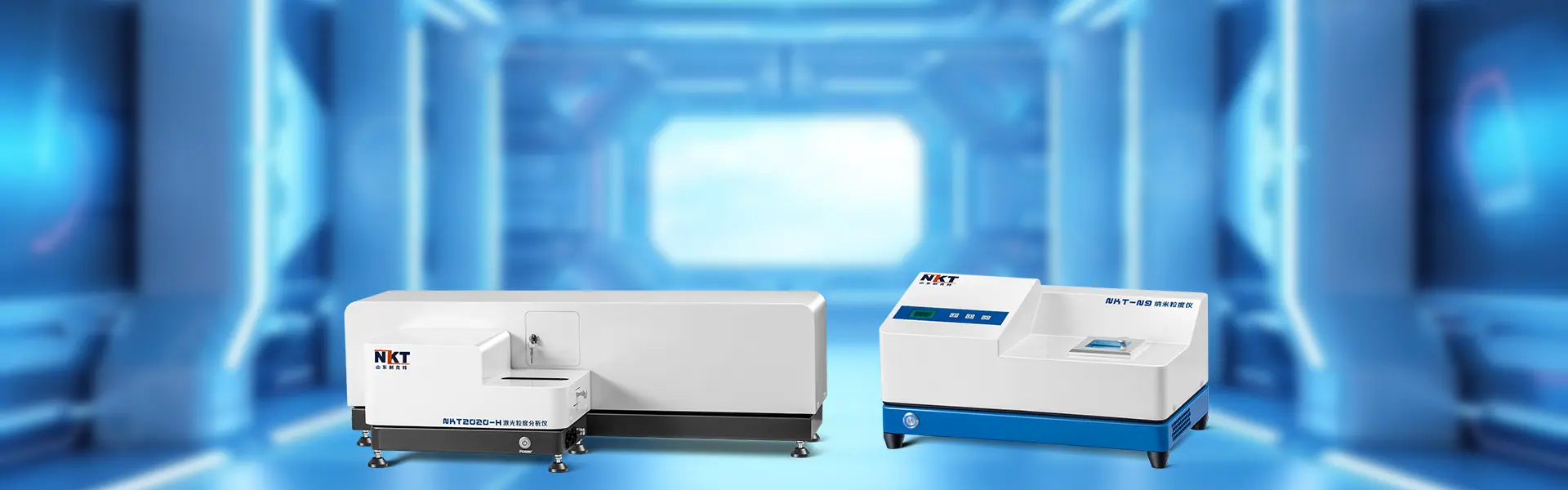
Which is the best particle size analyzer manufacturer in Shandong? Particle size analysis plays a crucial role in fields such as materials engineering, food engineering, pharmaceutical engineering, petrochemicals, and the defense industry. Due to the complexity and time-consuming nature of traditional particle size measurement methods, these methods are increasingly unable to meet the demands of rapid response required by modern industry and scientific research. With the advancement of cutting-edge science and technology, laser and microelectronics technologies have been applied to the field of particle size measurement, completely overcoming the shortcomings of conventional methods, significantly reducing labor intensity, accelerating sample testing speeds, and improving the quality of measurement results.
Which is the best particle size analyzer in Shandong? What is the principle behind laser particle size analyzers?

Which is the best particle size analyzer manufacturer in Shandong?
Which is the best particle size analyzer manufacturer in Shandong? Particle size analysis plays a crucial role in fields such as materials engineering, food engineering, pharmaceutical engineering, petrochemicals, and the defense industry. Due to the complexity and time-consuming nature of traditional particle size measurement methods, these methods are increasingly unable to meet the demands of rapid response required by modern industry and scientific research. With the advancement of cutting-edge science and technology, laser and microelectronics technologies have been applied to the field of particle size measurement, completely overcoming the shortcomings of conventional methods, significantly reducing labor intensity, accelerating sample testing speeds, and improving the quality of measurement results.
In recent years, numerous testing techniques and methods have emerged that are related to particle size distribution. Among these, laser diffraction particle sizing has gained widespread recognition due to its fast measurement speed, high accuracy, and excellent precision. As the name suggests, a laser particle size analyzer is, of course, a particle size analyzer. Which brand of particle size distribution analyzers is best in Shandong? This instrument leverages the monochromaticity and strong directivity of lasers. Laser particle size analyzers are widely acknowledged as being among the most advanced and fastest particle-testing instruments in the world.
Which is the best particle size analyzer in Shandong? What is the measurement principle of a laser particle size analyzer?
A laser particle size analyzer measures the particle size distribution based on the physical phenomenon that particles cause laser light to scatter. Because lasers have excellent monochromaticity and strong directivity, they can emit light indefinitely in an unbounded space with virtually no divergence during propagation. According to Mie scattering theory, when a light beam encounters particles that block it, part of the light is scattered, and the direction of propagation of the scattered light forms an angle θ with the direction of the incident beam. The magnitude of this angle θ is related to the size of the particles: the larger the particles, the smaller the angle θ; the smaller the particles, the larger the angle θ. Specifically, scattered light at small angles (θ) is caused by large particles, while scattered light at large angles (θ1) is caused by small particles. Further studies have shown that the intensity of the scattered light is proportional to the number of particles of a given size. Thus, by measuring the intensities of scattered light at different angles, it is possible to determine the particle size distribution of the sample.
To measure the intensity of scattered light at different angles, it is necessary to employ optical techniques for processing the scattered light. We place a Fourier lens at an appropriate position within the light beam and then position a multi-element photodetector array at the back focal plane of the Fourier lens. When scattered light from various angles passes through the Fourier lens and strikes the multi-element photodetector array, the optical signals are converted into electrical signals and transmitted to a computer. By using specialized software to process these signals, we can accurately determine the particle size distribution. This is how it works—and precisely because of this, we see many people using it.
Latest News
Shandong NKT
Service Hotline:
WhatsApp:
Address:
No. 299 Zidong Avenue, Tianqiao District, Jinan City, Xinmao Qilu Science and Technology City

WeChat.