






News Center
Professional manufacturer of intelligent analytical instruments
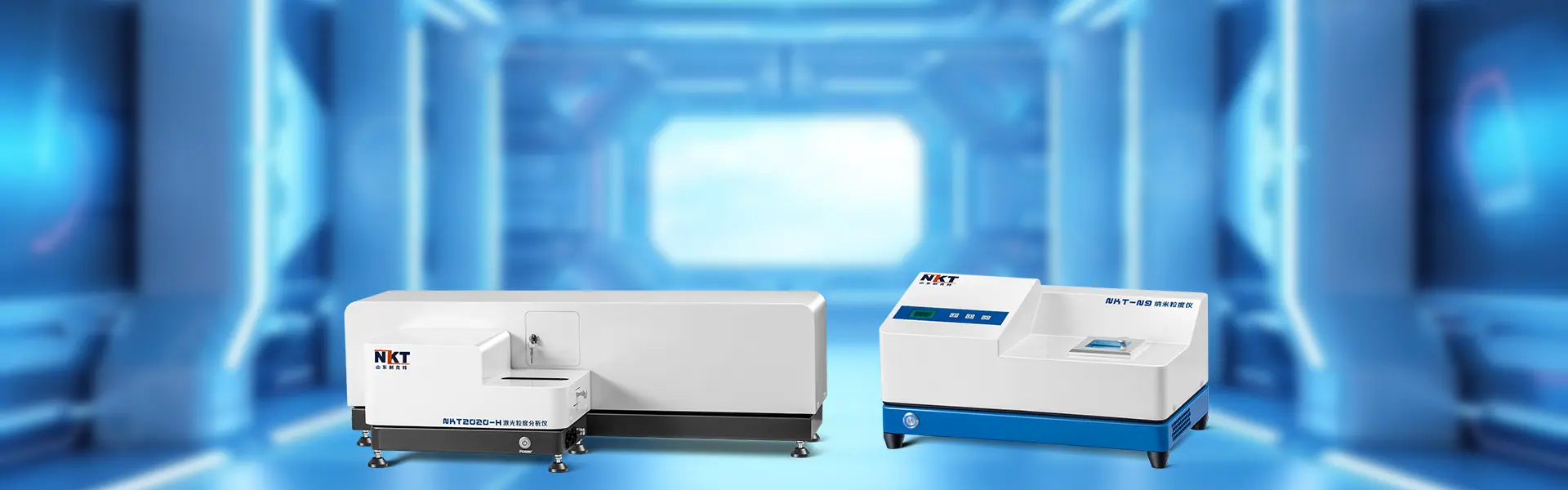
Which is the best particle size analyzer in Shandong? Current applications of laser particle size analyzers.
Release time:
2022-11-18
Author:
Source:
The earliest equipment used for particle-size measurement was the standard sieve. However, this method could only measure the residue retained on one or more specific sieve sizes, failing to provide a detailed particle-size distribution. Moreover, the testing process was labor-intensive and suffered from low accuracy. Later, settling-type particle-size analyzers were developed to measure particle-size distributions. Although these instruments can determine detailed particle-size distributions, they are relatively cumbersome to operate, exhibit poor repeatability, and have a narrow measurement range. A newer approach is the laser-based particle-size analyzer. Which particle-size analyzer manufacturer in Shandong is the best? Thanks to its significant advantages—such as a wide measurement range, excellent repeatability, high speed, and ease of operation—it has become widely adopted in the ceramic industry.
Which is the best particle size analyzer in Shandong? Current applications of laser particle size analyzers.

Which is the best particle size analyzer manufacturer in Shandong?
The earliest equipment used for particle-size measurement was the standard sieve. However, this method could only measure the residue retained on one or more specific sieve sizes, failing to provide a detailed particle-size distribution. Moreover, the testing process was labor-intensive and had low accuracy. Later, settling-type particle-size analyzers were developed to measure particle-size distributions. Although these instruments could determine detailed particle-size distributions, they were relatively cumbersome to operate, suffered from poor repeatability, and had a narrow measurement range. A newer approach is the laser-based particle-size analyzer. Which laser particle-size analyzer manufacturer in Shandong is the best? Thanks to its significant advantages—such as a wide measurement range, excellent repeatability, high speed, and ease of operation—this technology has become widely adopted in the glaze industry. The widespread adoption of laser particle-size analyzers has played a clear and positive role in promoting technological advancement within China’s colored-glaze industry. However, during the course of promotion, several challenges have emerged, primarily manifesting in two key areas:
1. Comparison with the results of traditional screening methods
Traditionally, the ceramic glaze industry has relied on sieving to determine the particle size of its products. Although this method is relatively outdated, it remains widely accepted throughout the industry. As a result, some users who employ laser particle size analyzers often compare the cumulative values obtained by the laser analyzer at a particular particle size with the percentage by weight passing through a sieve—requiring that these two measurements be consistent. Which manufacturer offers the best particle size distribution analyzer in Shandong? Intuitively, such a comparison seems perfectly reasonable. However, particle size measurement differs fundamentally from typical physical and chemical measurements: the results obtained by two particle size measurement methods based on different principles should not be identical. The only exceptions are special cases or situations where the results have been artificially adjusted to match each other.
Limited by traditional notions, habitual ways of thinking, or conventional production processes, users sometimes fail to understand the differences mentioned above or strongly demand that instrument suppliers modify the test results from laser particle size analyzers to make them consistent with traditional results. Since laser particle size analyzers use computers as components, making such modifications is not particularly difficult. The problem, however, is that after these modifications, the test results become distorted. Therefore, users would do well to gradually come to accept the results provided by laser particle size analyzers. As everyone knows, laser particle size analyzers are highly mature instruments that are far more advanced than sieve-based methods.
2. Quantitative Comparison Among Different Laser Particle Size Analyzers
Sometimes, users may find that different laser particle size analyzers yield inconsistent test results. The reasons for this phenomenon include differences in the optical configurations of the instruments, variations in data analysis software, drift in instrument operating conditions, and human-induced modifications to the results (for example, comparing them with sieve analysis results). An effective way to address this issue is to prepare standard samples specific to the industry and use them to calibrate all instruments. This requires cooperation and concerted efforts from the entire industry.
In practical testing, accuracy is relative, whereas repeatability is absolute. In actual particle-size measurements, we cannot assess the “accuracy” or “inaccuracy” of laser particle-size analyzer results, because the samples are irregularly shaped objects. The test results obtained by comparison are merely those from another instrument. Therefore, we can only say that the results from Instrument A are accurate when compared to those from Instrument B; we cannot claim that the results from Instrument A are either accurate or inaccurate. Many testers tend to compare their results with those from Malvern.
Which particle size analyzer in Shandong is the best? As long as they meet the requirements, they are accurate; otherwise, they are inaccurate. In fact, this is a misconception. The true standard for measuring instrument quality is repeatability. Take a certain type of sample and test it repeatedly. If the difference between the results of the previous and subsequent tests is small, it indicates that the instrument is stable and has good repeatability. If the difference is large, it suggests that the instrument’s testing performance is poor.
Latest News
Shandong NKT
Service Hotline:
WhatsApp:
Address:
No. 299 Zidong Avenue, Tianqiao District, Jinan City, Xinmao Qilu Science and Technology City

WeChat.